
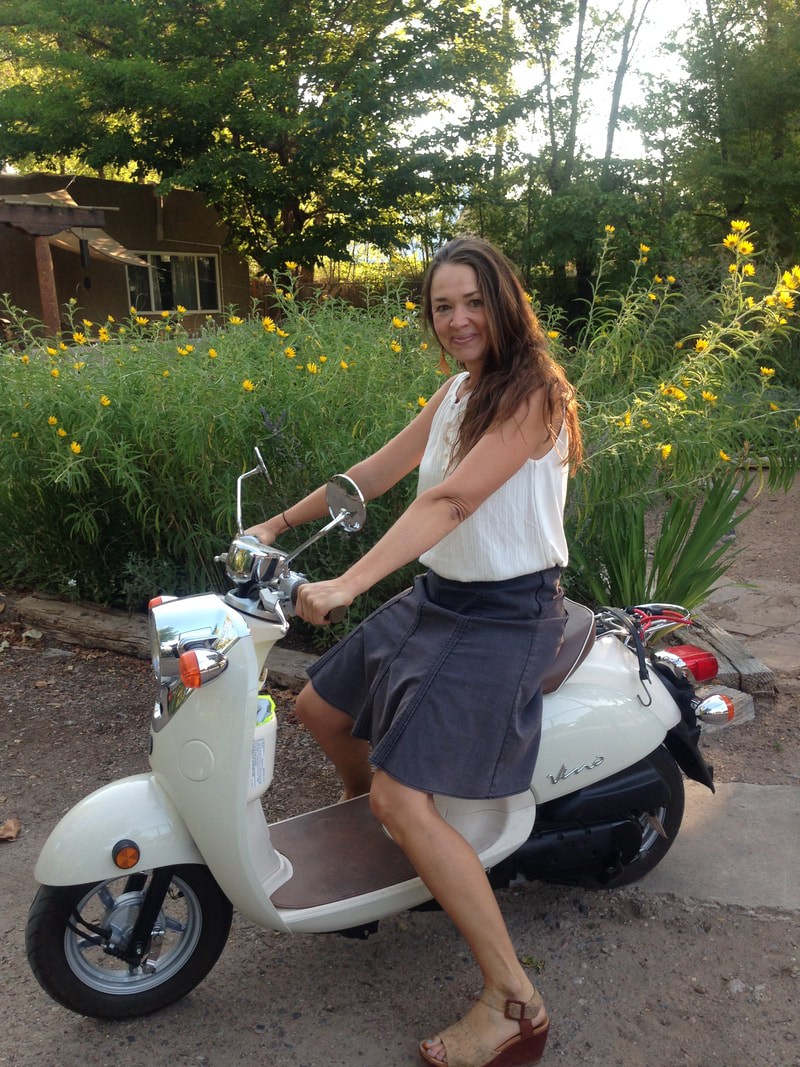
 Photo by Ronda Brulotte, taken in Albuquerque's South Valley.
 ~With a grateful nod to April Goltz for the gentle push given at a crucial moment~
In general, I try to avoid being the kind of person who believes that whatever I do is the thing that everyone else should do—I believe in the right to self-determination—but, when it comes to owning a scooter as a songwriter, anthropologist and a mindfulness practitioner, I want to make a strong plug.
I recently purchased a gently used cream and brown-colored scooter, and it has woken me up to my senses in my own community and neighborhood in a way I haven’t experienced in quite some time. Born out of both tragedy and necessity--my truck was hit the day before an extended international trip so I returned home to no vehicle and needed immediate transportation—the scooter for me is the ultimate attempt at “making lemons out of lemonade” in a situation not of my own choosing but which nonetheless appeared and needed my focused and present attention.
As a songwriting instructor at the University of New Mexico, I am constantly pushing my students to incorporate their senses more fully and actively into their songs; as an anthropologist and teacher of ethnographic writing, I similarly encourage my students to be not just the observer but also to become the participant in the worlds around them they want to learn more about and understand more deeply from an insider’s perspective. But in my own daily grind and commute to and from the University, I sometimes forget to do the same.
My scooter only goes up to 40 miles per hour—it’s a 50 cc and thus isn’t highway legal— so I’ve been forced to re-route my commute, scoping out secondary roads in my neighborhood I never knew existed, and in this sense, it’s created a true beginner’s mind. Now, on my daily commute, I smell the fresh masa and the red and green chile as I pass the local tamale factory in Albuquerque’s south valley, the place I call home; I smell the acutely fresh manure on the alfalfa fields down the street from my house, the smoky aroma of the green chiles my my neighbor is roasting for the fall in the backyard.
Since I’m much closer to humanity on a scooter, I also see and feel the homeless shelter on second street in a brand-new way: I see the lines on peoples’ faces, hear fragments of their conversations before the light turns, see the man holding his pants up because he’s lost his belt, feel the anxiety and stress of living without shelter in the way that people walk and carry their bodies, too. These experiences are, for me, the scope of what John Kabat Zinn would refer to as “full catastrophe living.” I am no longer protected by the bubble of protection that the cab of my four-wheel-drive, elevated pickup truck provided, nor am I protected by the phone conversation I’m having as I drive or the music I’m listening to. I am now the little guy: focused on the road, on the driver behind me, on vehicle makes, models, colors and shapes, and on turn signals. It’s a matter of life and death that forces me to stay active and present, in my own moment by moment awareness.
In general, I try to avoid being the kind of person who believes that whatever I do is the thing that everyone else should do—I believe in the right to self-determination—but, when it comes to owning a scooter as a songwriter, anthropologist and a mindfulness practitioner, I want to make a strong plug.
I recently purchased a gently used cream and brown-colored scooter, and it has woken me up to my senses in my own community and neighborhood in a way I haven’t experienced in quite some time. Born out of both tragedy and necessity--my truck was hit the day before an extended international trip so I returned home to no vehicle and needed immediate transportation—the scooter for me is the ultimate attempt at “making lemons out of lemonade” in a situation not of my own choosing but which nonetheless appeared and needed my focused and present attention.
As a songwriting instructor at the University of New Mexico, I am constantly pushing my students to incorporate their senses more fully and actively into their songs; as an anthropologist and teacher of ethnographic writing, I similarly encourage my students to be not just the observer but also to become the participant in the worlds around them they want to learn more about and understand more deeply from an insider’s perspective. But in my own daily grind and commute to and from the University, I sometimes forget to do the same.
My scooter only goes up to 40 miles per hour—it’s a 50 cc and thus isn’t highway legal— so I’ve been forced to re-route my commute, scoping out secondary roads in my neighborhood I never knew existed, and in this sense, it’s created a true beginner’s mind. Now, on my daily commute, I smell the fresh masa and the red and green chile as I pass the local tamale factory in Albuquerque’s south valley, the place I call home; I smell the acutely fresh manure on the alfalfa fields down the street from my house, the smoky aroma of the green chiles my my neighbor is roasting for the fall in the backyard.
Since I’m much closer to humanity on a scooter, I also see and feel the homeless shelter on second street in a brand-new way: I see the lines on peoples’ faces, hear fragments of their conversations before the light turns, see the man holding his pants up because he’s lost his belt, feel the anxiety and stress of living without shelter in the way that people walk and carry their bodies, too. These experiences are, for me, the scope of what John Kabat Zinn would refer to as “full catastrophe living.” I am no longer protected by the bubble of protection that the cab of my four-wheel-drive, elevated pickup truck provided, nor am I protected by the phone conversation I’m having as I drive or the music I’m listening to. I am now the little guy: focused on the road, on the driver behind me, on vehicle makes, models, colors and shapes, and on turn signals. It’s a matter of life and death that forces me to stay active and present, in my own moment by moment awareness.
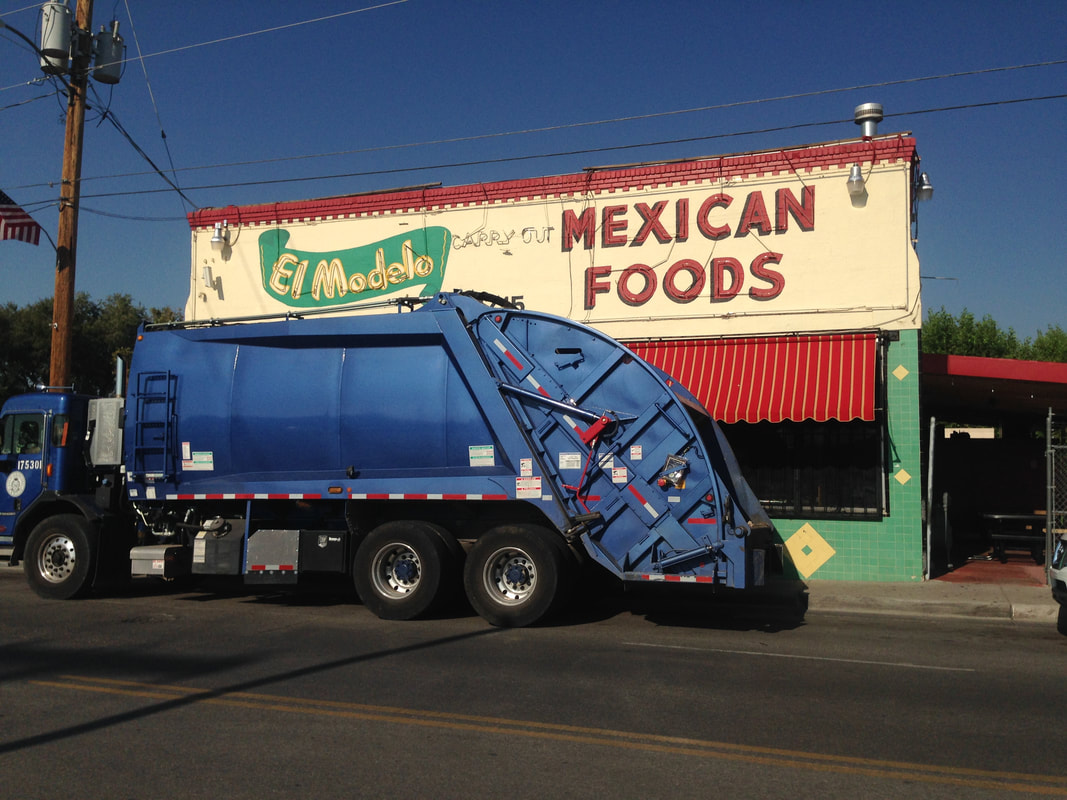
Being on a scooter has also enabled me to be exponentially more spontaneous; I have now, in the last two weeks, visited the same friend, twice, because my new route takes me by her house. The visits were short—15 minutes or less—but their authenticity and spontaneity and seeing her bright face absolutely made my day.
Should everyone own a scooter? Perhaps not. But the encouragement, at least from my vantagepoint, is to search for and go after that thing that makes you feel awake and surprised and brings a sense of wonder to your daily grind and to the things we do on auto-pilot, no matter how small or seemingly inconsequential the change may seem. This is what songwriter Allen Shamblin calls “going after the things that makes tears tears push at the backs of your eyes.” Because these things not only make us more mindful and sensate songwriters and ethnographers: they also increase our joy quotient, exponentially. How we spend our days, the saying goes, is, in fact, how we spend our lives.
Should everyone own a scooter? Perhaps not. But the encouragement, at least from my vantagepoint, is to search for and go after that thing that makes you feel awake and surprised and brings a sense of wonder to your daily grind and to the things we do on auto-pilot, no matter how small or seemingly inconsequential the change may seem. This is what songwriter Allen Shamblin calls “going after the things that makes tears tears push at the backs of your eyes.” Because these things not only make us more mindful and sensate songwriters and ethnographers: they also increase our joy quotient, exponentially. How we spend our days, the saying goes, is, in fact, how we spend our lives.
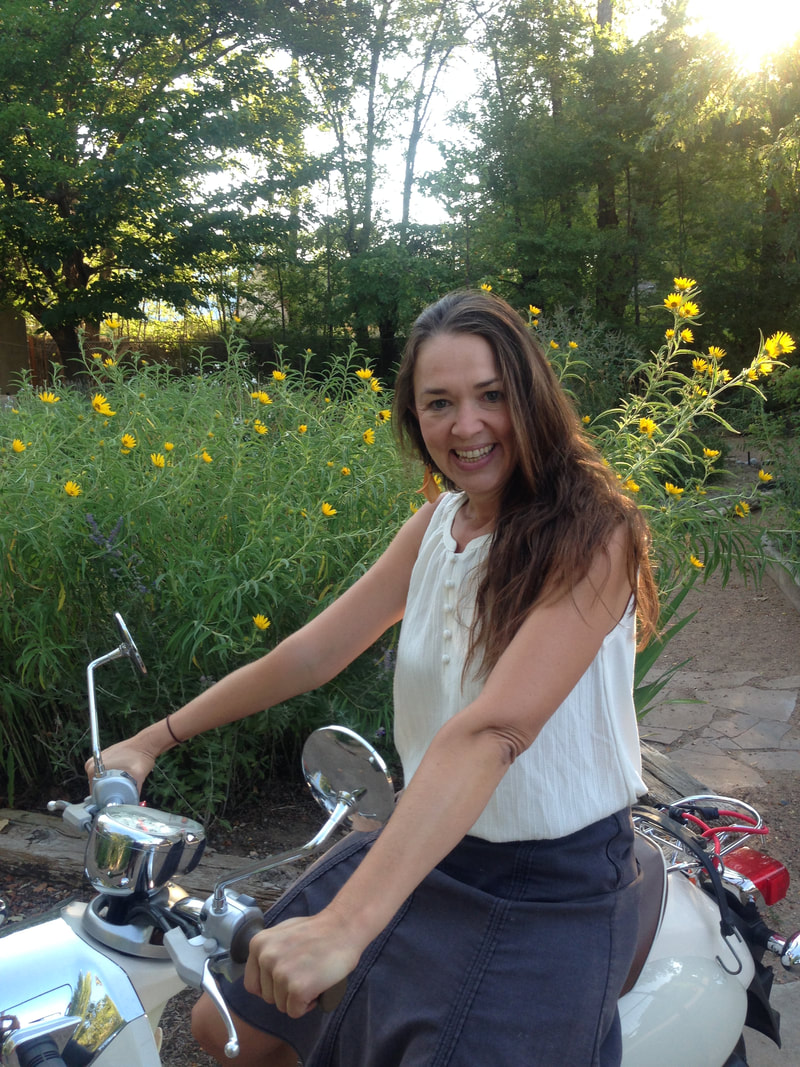
Photo by Ronda Brulotte.
 RSS Feed
